
America’s Biggest Electricity Source
Grand Coulee Dam was once the world’s largest!

America’s engineers built the Panama Canal in 10 years in the time of Teddy Roosevelt. That was a just warm-up for even two more massive projects that provided water and electricity to create agriculture and industry for the vast US West.
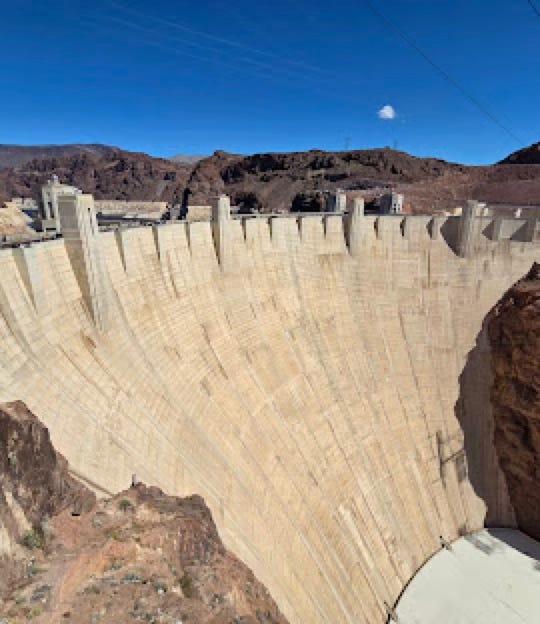
The Hoover Dam harnessed the mighty Colorado River with the largest concrete structure ever built. The project was completed in 1936, after 5 years, 2 years ahead of schedule. Its 19 turbine generators produce 2.0 GW electricity. Of the 5,000 workers, 119 died on the job.
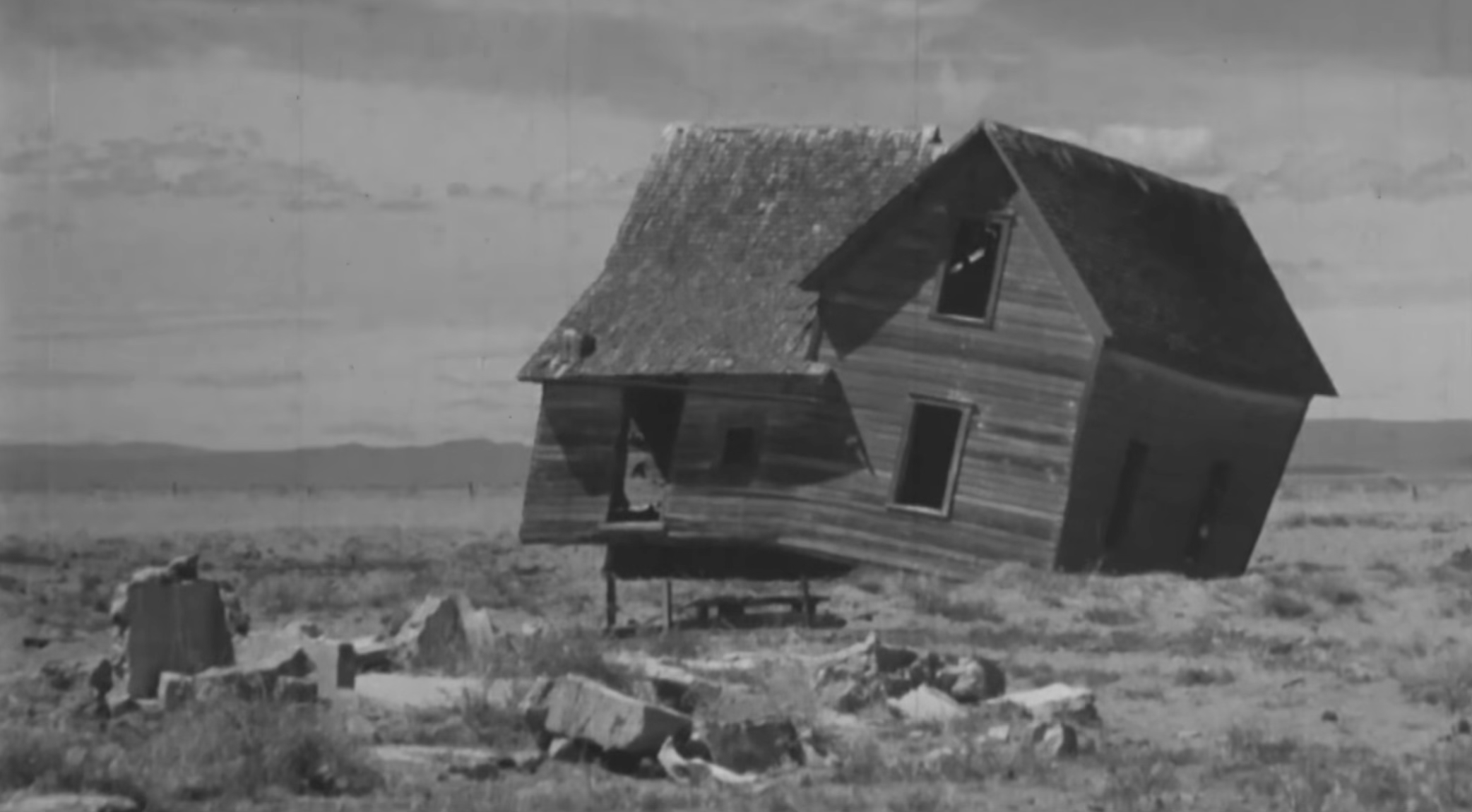
The ambitious Grand Coulee Dam project took 9 years starting in 1933. The Grand Coulee was once the bed of a lake formed by an Ice Age glacier that blocked the Columbia River. In recent centuries the lakebed was arid and unproductive. Changing the dry coulee into farmland would require water from the river, 200 meters below.
The proposed 168 meter high dam alone could not irrigate the 600,000 acre Grand Coulee. Hydroelectricity pumped river water up to the high Banks Lake for energy storage and irrigation.
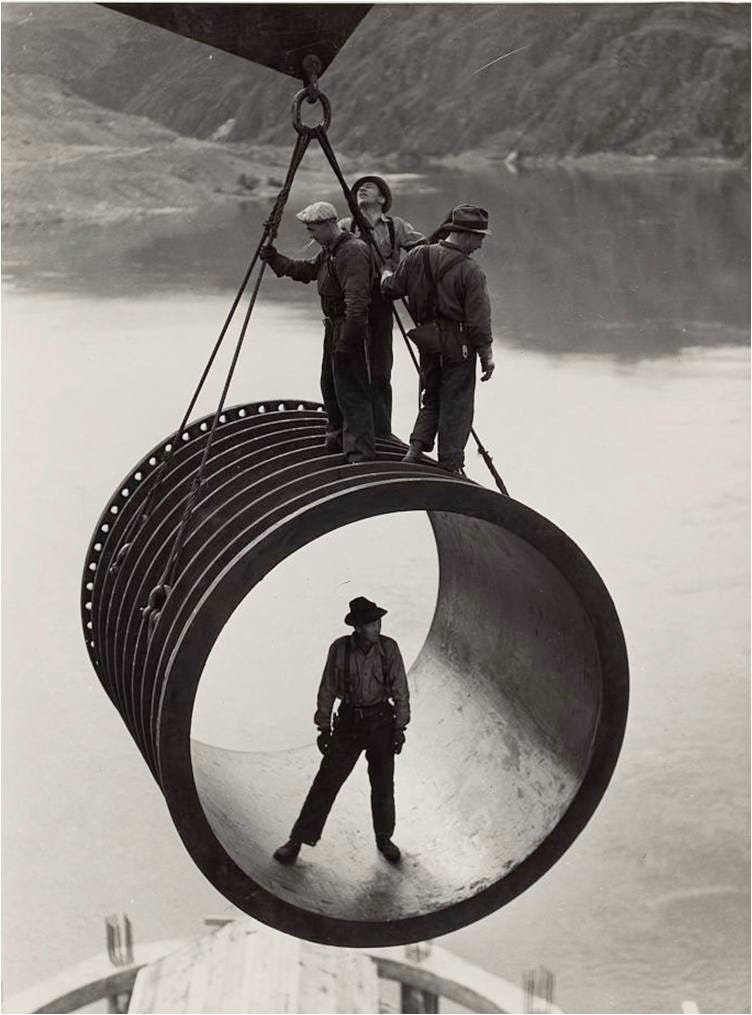
Piping channels Columbia River water to 33 turbine generators producing 6.8 GW of electric power. The project provided jobs for 5,500 workers in the Depression era, but 77 died in accidents.
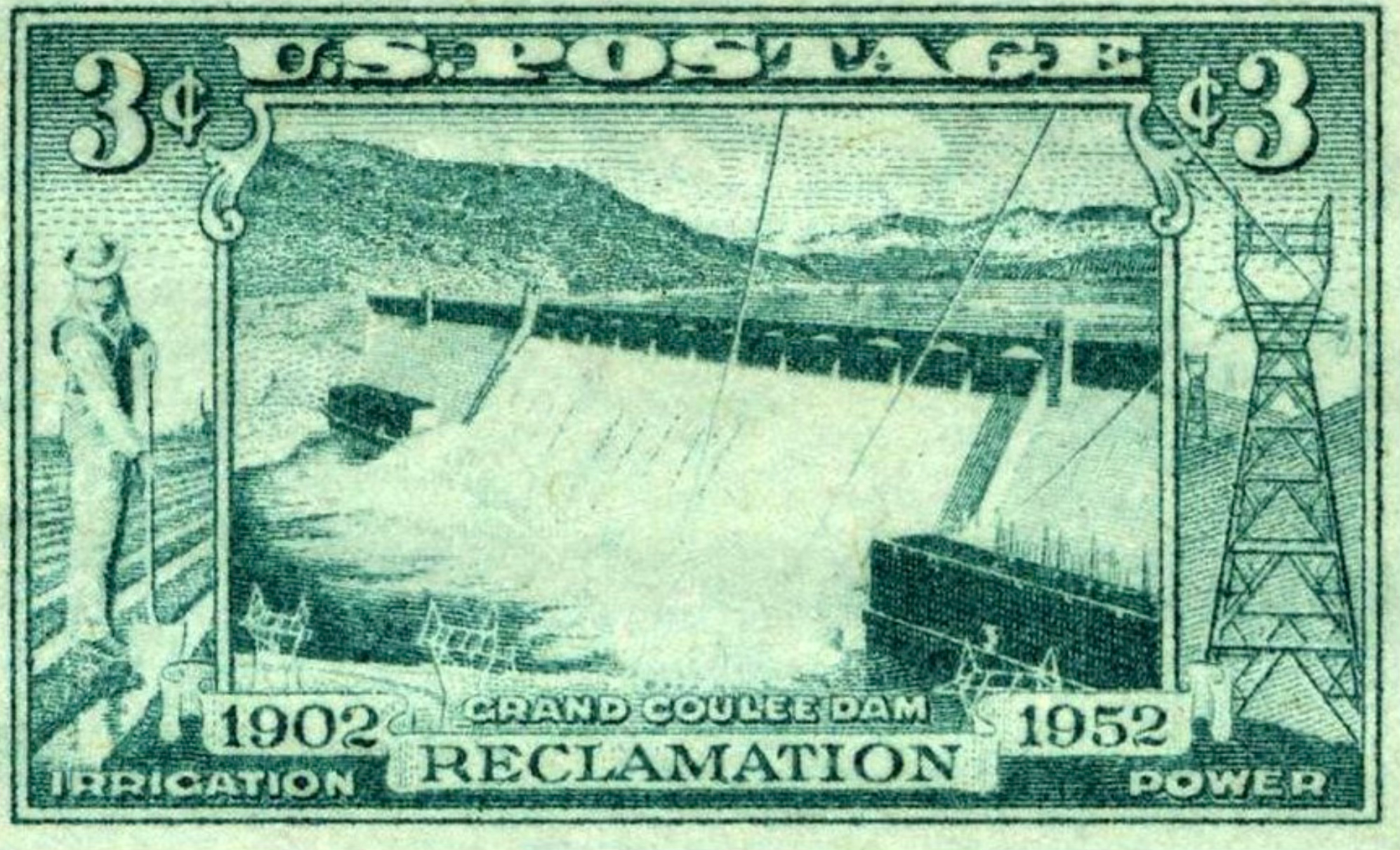
The US Bureaus of Reclamation managed this project, featured on a postage stamp. Woodie Guthrie joined the celebration with “This land is your land…”. Historical films show the construction in this video.
President Franklin Roosevelt at first balked because the cost would exceed even the Panama Canal expenditure. The eventual cost was roughly $6 billion in current dollars. Perplexity AI estimates building it today would cost $15-30+ billion, about $4/watt of generating capacity.
America’s Biggest Power Plant
Both hydroelectric projects were once the world’s largest power plants. Some people say Grand Coulee 6.8 GW generation station is still America’s biggest electric power plant. Is it? Here are US power plants in energy generation rank order:
Power plant Type TWh/yr GW Use
1.  Palo Verde, AZ         Nuclear      32            3.9     94%
2.  Browns Ferry, AB   Nuclear      29            3.6     92%
3.  Peach Bottom, PA   Nuclear      22            2.6     97%
4.  South Texas Proj    Nuclear      22            2.6     97%
5.  Grand Coulee, WA  Hydro          21            6.8     35%
6.  Oconee, SC               Nuclear.      21            2.6     92%
7.  James Miller, AL    Coal             13            2.8      53%
Palo Verde nuclear power plant is America’s largest source of electric energy. It operates at 94% of full capacity, taking time off for refueling and maintenance.
The Grand Coulee Dam operates on average at 35% of capacity. River water flow is seasonal. Pumping irrigation water uses about 0.6 GW. Grand Coulee is #1 in peak power generation capacity, but #5 in average energy provided.
Power is energy per unit time. The table above distinguishes actual energy generated (TWh) from the ‘nameplate’ power (GW) generation capability. News reporters and ‘renewable’ supporters present only the potential GWs of power at optimal conditions, not capacity factor %, nor energy delivered.
Proven nuclear power meets US needs
The US electric grid is only marginally reliable. CO2-emitting generators are being replaced with on-and-off wind and solar sources, operating even below 35% capacity factor. The US economy is demanding more electricity for manufacturing growth, data centers and AI.
Five of the top six US power sources are large nuclear power plants. More such powerful, reliable, clean energy sources are in demand. New nuclear reactors generating 0.3 to 0.5 GW can be ganged together in large power stations.
The recent build of 2.2 GW of US nuclear power plants cost $10/watt. Large, 1.4 GW nuclear power plants have been built elsewhere quickly at costs near $3/watt. Oconee, #6 in the list above, is still operating. It was built for $1/watt in current dollars.
America must lower its nuclear power plant costs. US nuclear power laws, regulations, issues, and solutions are presented in Why can’t the US dominate nuclear power?
Your article
https://hargraves.substack.com/p/drowning-in-nrc-documents
is a pretty good explanation of how regulation is strangling nuclear in the US, driving up costs by many factors and extending build times unconscionably.
Also a pretty good argument for razing the NRC to the basement and starting fresh. 5 million documents cannot be reviewed in order to decide what to keep in any reasonable amount of time. The whole thing should be discarded.
Interesting comparison of power station outputs.
But what about by value? Hydro plants have the the advantage that they can operate for the 35% of most expensive electricity hours. If nuclear plants can't throttle down, then they have to sell electricity at zero prices during the middle of the day. Hence why Thorcon reactors are shown with salt buffers to ramp down output midday.
In future, conventional reactors will have to schedule several months down time for refuelling and maintenance, over the summer, every second year.