
Electricity for developing nations
Ample power creates the opportunity for prosperity.

US lifestyle is enabled by ample electricity, using an order of magnitude more electric energy than in the populous developing nations.

Hannah Ritchie writes about this in By The Numbers. Running a 1,000 watt bedroom air conditioner to sleep 8 hours uses 3,000 kWh a year.
Electric appliances give women time off from home duties to read, study, get jobs, become independent, and make choices about bearing children.

Hans Rosling recorded the impact of The Magic Washing Machine at a classic TEDWomen talk, worth rewatching. Rosling advises leaders to promise washing machines to be elected.
Low cost nuclear power can provide the ample energy needed and also support economic growth to create jobs so consumers can afford do buy such appliances.
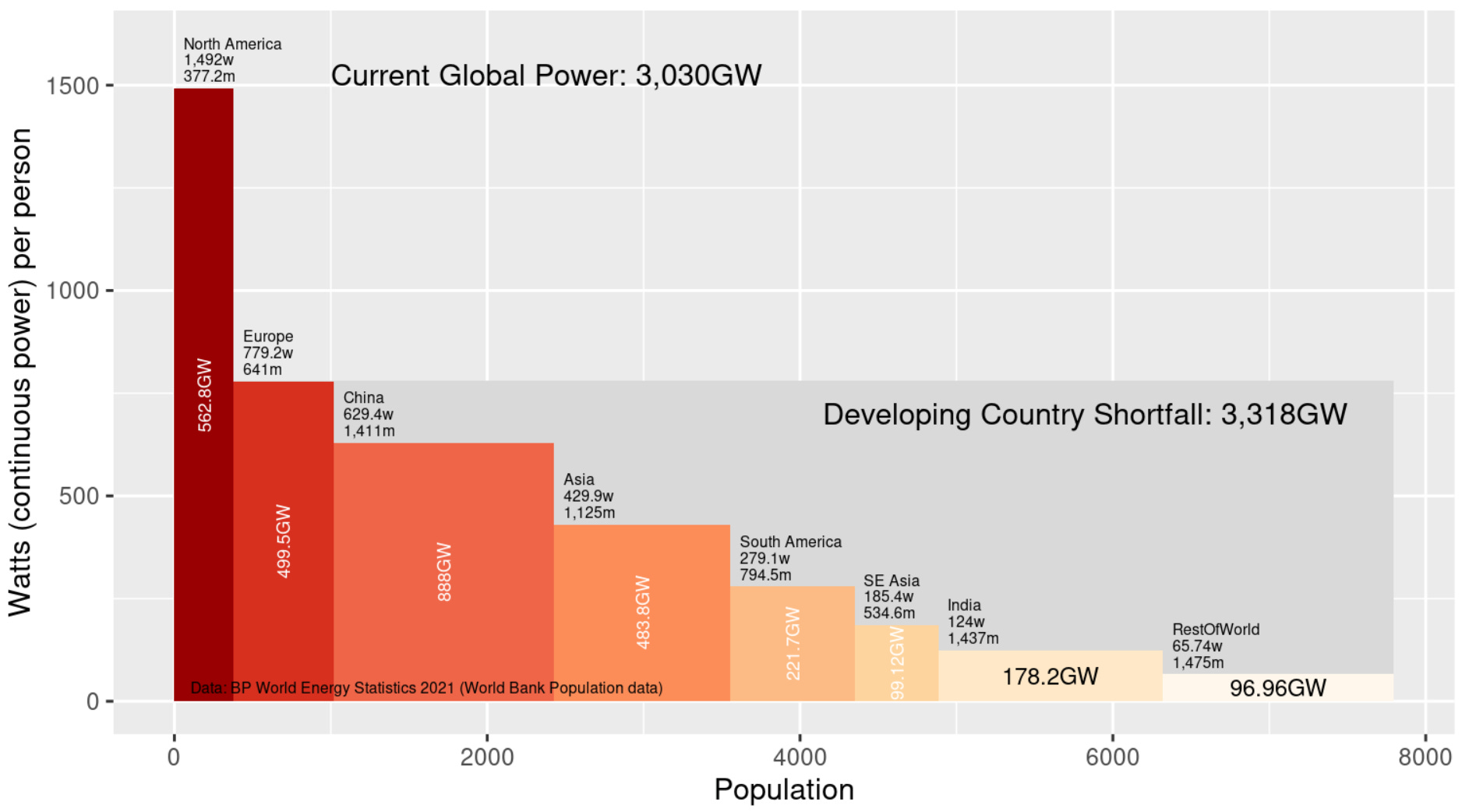
Enabling European lifestyles everywhere would require about 3,000 GW of full-time electric power. We could reduce nuclear power costs to $1 billion/GW if we return to the original costs of building US nuclear power plants.

The SE Asia electricity market will grow to $600 billion by 2040. Indonesia alone expects to install 54 GW of nuclear power by 2060. Thorcon International explains how it will provide low cost nuclear power.
This is a fascinating article. I did not know that we led the world in electricity usage to that extent. Have you looked at how much of the electricity is residential use and how much is commercial? The reason I ask is the effect of hyperscalers on electricity usage. On any given month ERCOT can supply and average 80-100 GW of power. They have received large interconnection requests for an additional 233 GW. Nearly all of that is from hyperscalers. I have been interested in what effect this is going to have on our aging gird and our misguided efforts to switch from bedload to intermittent power.
My Seraph Power wind turbine (patent issued, still under development) is simple and cheap to make, and designed to provide local power.