
Liquid fuels for nuclear reactors
Solid fuel performance has improved for 50 years; now costs are rising.

Chris Keefer at Decouple has written a wonderfully clear explanation of the forms of uranium fuel used in nuclear reactors. Please spend an hour to understand his two articles about solid fuel state of the art.
1. Nuclear Fuel: The Most Sophisticated Industrial Product You’ve Never Heard About
2. The Expensive Fuels Powering Advanced Nuclear’s Biggest Promises
The most common fuel format for nuclear reactors is solid pellets of UO2, uranium oxide, within cladding tubes of zirconium metal. Fission heats the center of the pellet to temperatures as high as 1600°C. The heat energy is transferred to the cladding metal, thence to the liquid water flowing to a thermal-electric power conversion system. To maximize heat transfer, the water flowing by fuel tubes in the reactor vessel is kept liquid by containing it at 155 times atmospheric pressure, also keeping temperature no more than 315°C in a pressurized water reactor.
The thermal-to-electricity efficiency is about 33%. A supercritical steam turbine-generator might operate at fully 46% efficiency if fed supercritical steam at 550°C.
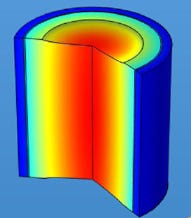
TRISO fuel is UO2 bits layered with ceramics to form poppy-seed-size particles. Thousands are contained in balls or blocks of graphite to provide structure and neutron moderation. Fission temperatures reach 1200°C on the graphite surfaces that transfer heat to flowing helium gas reaching 750°C. The helium gas is usefully hot, but even pressurized to 60 times atmospheric does not provide the heat transfer capability of liquid water.
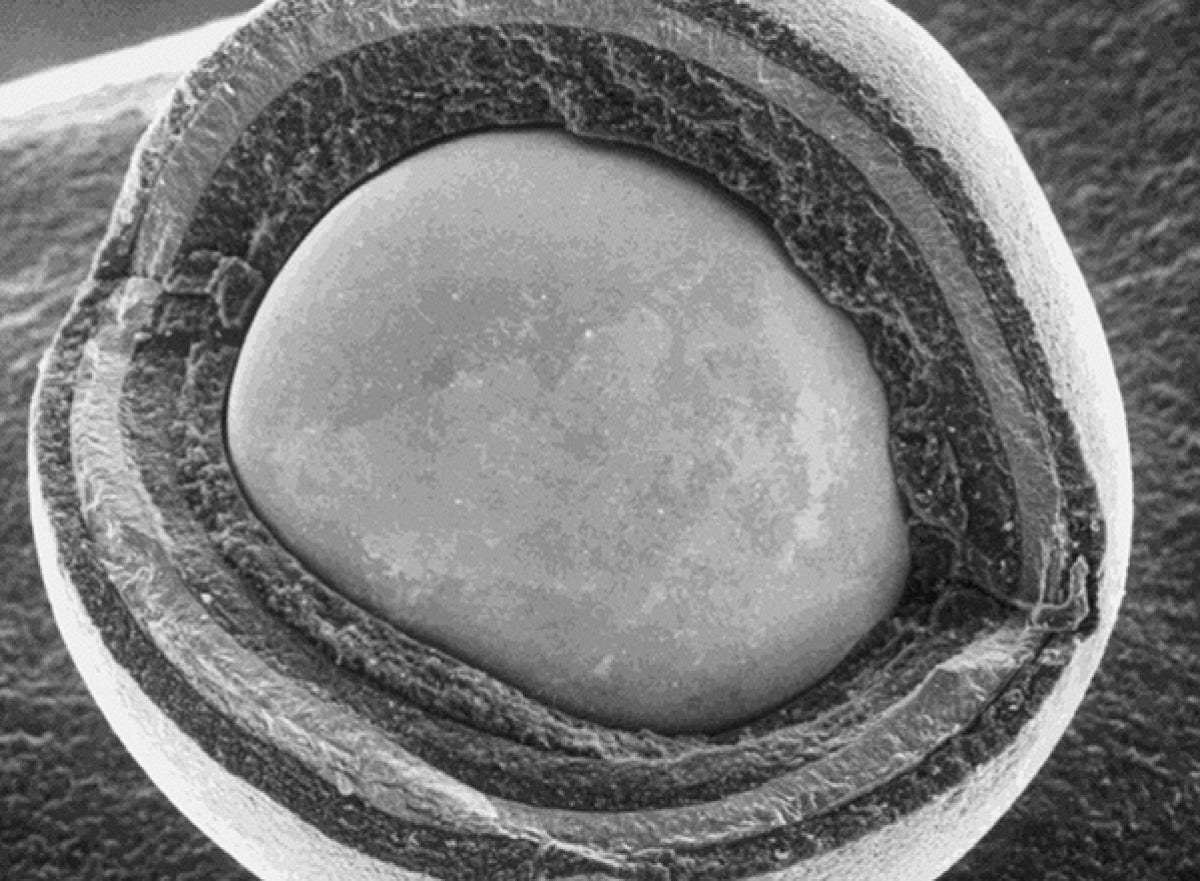
Kairos Power is prototyping a nuclear reactor using balls of solid TRISO fuel, with heat transferred by molten fluoride salts of lithium and beryllium, which have higher heat capacity than helium gas..
Thorcon International’s reactor development sidesteps fission heat transfer by using liquid fuel — uranium dissolved in molten sodium and beryllium fluoride salts. Oak Ridge National Labs prototyped this technology. The molten salt flows through passages in the reactor’s moderating graphite core. The low pressure fuel-salt reaches 700°C by fission, then transfers the hot thermal energy through heat exchangers to create 550*C steam for supercritical steam turbines with high, 46% efficiency.
Regular refueling with standard 5% enriched uranium fuel salt displaces similar amounts of the reactor’s circulating, less enriched uranium fuel-salt. It is accumulated then used to start up another Thorcon 500 power plant.
The Thorcon 500 can generate electricity at low costs, competitive with coal-fired power plants. Keys include avoidance of solid fuel fabrication costs, low pressure reactor vessel, high temperature power conversion efficiency, and shipyard construction of standard 500 MW plants delivered by sea to coastal locations. [I am a cofounder of Thorcon International.]
Yes, for the near future. Utilizing thorium required HALEU (5-20% enriched uranium) fuel to compensate for neutrons absorbed by thorium. The only commercial, affordable HALEU source is Russia, so we revised the design. Circulating fuel salt uranium is well under 5% enrichment. Makeup uranium fuel salt is 5% enriched, readily available.
Is it true Thorcon is switching to 100% uranium fuel rather than a thorium/uranium mix? What enrichment level is the uranium fuel? What is the burnup GWd/tonne?